A few weeks ago Heather sent around a post with handprints on a cave wall. I've been going back to that picture over and over again and what I liked was that the handprints looked burned into the stone.
I thought Burnstone and this is the story it inspired!
amm
In Burnstone, Washington one of my favorite places to visit is the Tymbal Cemetery and Funeral Home.
Tymbal is a pauper's cemetery from the old days so it's not great shakes. No fancy monuments, no fancy gates but there are trees and they’re covered with ivy which is nice because the trees have been dead for years and they don’t put leaves out anymore.
The sad thing is everyone forgot the Cemetery was there and for awhile the City of Burnstone Streets Department used Tymbal as a storage place for their work trucks and they used the Funeral home as office space until someone realized all those garbage trucks and lawn mowers and a bunch of other maintenance tools were leaking oil all over unmarked graves.
So before you could say ' desecration ' the City decided to build a new maintenance facility for the Street Works Department and without as much as a backwards glance they left the graveyard to choke on weeds and nettles and blackberry bushes.
Looking back, it was sort of odd the way the weeds came back so fast.
Anyway.
About a month after the big move a young woman named Tamus Bloodroot slammed her car into one of the dead trees near the cemetery entrance and she never left.
She never left because no one ever found her.
They found her car, they found the door open and they found a large pool of blood about three feet away from the crash sight.
But they never found Tamus.
The day after they found her car stories about an injured woman, who was identified as Tamus, asking for help at the side of the road started up. Some people said they actually stopped for her and picked her up and talked to her and she always said the same thing, “ can you help me now. “
When they turned to reassure her that’s what they’re doing she’d be gone.
You can imagine Tamus Bloodroot's family was pretty upset that they're daughter had become an urban legend and people were suppose to be talking to her ghost.
" I doubt " her Father had screamed into the face of a reporter doing Halloween stories for the evening news one year, " that if my daughter could come back from the grave she'd spend all of her time asking drunken teenagers for rides to the hospital."
That was true, in life Tamus wasn’t the sort of person who asked for anything, she’d tell you exactly what she wanted and if you didn’t come across…heaven help you. The girl had a temper and the holes in her bedroom walls and her trail of broken relationships were solid proof of that.
Life went on after that… even Tamus Bloodroot went on, people never stopped seeing her and they all knew she was out there asking for help.
Bryony Middleton and his family live out on Cemetery Road. He’s lived out there his entire life
And he knows that stretch of road so well he could drive it with his eyes closed.
That’s something he did almost every Saturday night after and evening on the town with his friends. He’s sort of famous around here for that, you might not know Bryony’s name or anything about him but you’ve heard of the ‘ guy who drives passed the cemetery in his sleep on Saturdays’.
Anyway it was one of his 10 or was it 12 kids that said to him after finding him and his truck at the end of their driveway one morning " if you're going to drive when you’re sleeping Daddy, at least wear your seat belt."
Not to be mean, and Bryony loved his 10-12 children a lot even if he forgot their names and didn't know exactly how many of them there were, but on more then one occasion Bryony was heard to say, " Geeze, my kids, you know they're okay as far as rug rats go but they sure aren't the sharpest tools in the shed, if you get my meaning."
But this time Bryony’s kids were right and on that winter evening out on Tymbal Cemetery Road his kids were the sharpest tools to be found in any shed anywhere on the planet.
The roads were iced over when Bryony left the " Corner Tavern " only he didn't notice. I mean he was sliding and tripping a lot...but you know he'd chalked that up to the liquid refreshments he'd indulged in for the past four hours.
So Bryony got into his truck and tried to buckle himself in, but he couldn't make the lock work so he put the belt on and tied it closed and then he took a roll of duct tape and somehow managed to tape himself to his seat.
I'm not kidding I wish I were. Like I said, Bryony loved his kids and he'd do any for them even if they only had a handful of brain cells between them.
Then he turned the key in the ignition (he always left it in because it was pretty hard for him to fit that key into that little hole after a long evening out) and he took a sloppy left and turned out onto the unlit road, marked as Old Burnstone Highway but known unofficially as Cemetery Road by the locals.
He was halfway home and nearly asleep when he came to Tymbal Cemetery and saw the Funeral Home with the tape on it’s cracked windows. Bryony mistook it for his house and in a panic he jerked the steering wheel and sent his truck into the ditch that surrounded the cemetery.
Like I said, Tymbal’s is a Pauper’s Graveyard and there are no frills about it. The people out there were forgotten in life and they were forgotten in death too.
So the residents of Tymbal's have numbers, not names and they have pine boxes made at the Prison in Fallen not fancy caskets with brass handles. And there is no fence surrounding the cemetery just a ditch cut into a “V” shape and it's lined with jagged sharp rocks that were once the face of an old Mansion that burned to the ground about 100 years ago.
The Old Mansion was wasn't a good place and it’s owners were sort of an embarrassment to the City so after the fire Burnstone hauled off a mountain of debris and they decided to put it to good use.
Anything they could salvage went into the construction of The Tymbal Funeral Home and Cemetery.
The " fence" is what Bryony hit that night. His truck went into the ditch head on and then it flipped and rolled and finally stopped almost in the middle of the graveyard.
Taped and tied to his seat Bryony was bruised and beaten and good thing he was sitting upright because if he'd been in any other position he'd probably have choked on his own vomit, of which he apparently lost a lot of that night.
When he was done he considered his options.
He could cut himself loose but more then likely he'd end up stabbing himself to death because at the moment one of his eyes was swollen shut and the other, well you know Bryony should probably be wearing glasses but he doesn't.
Plus the crash had done nothing to sober him up he wasn’t sure he could find the business end of the knife if he wanted to.
" Poor Daddy, " he could actually see one of his many children saying to his unborn grandchildren " he survived the worse car accident ever and he ended up stabbing himself to death trying to cut himself loose from his car seat. No, he wasn't trapped. Somehow he taped himself to his seat. No I can't explain it. I loved my Dad but he wasn't the sharpest tool in the shed if you get my meaning."
So Bryony figured all he could do was sit there and more likely then not someone would see him from the road in the morning. Resigned to a long cold smelly night he was about to try to catch some sleep when he saw the woman standing next to his car.
She was facing away from him and the way she was standing was wrong. Her shoulders were twisted and one of her arms seemed to be hanging a little lower then the other. At first Bryony thought she was tilting her head to the side like she was listening for something, but then he realized her head wasn't tilted it was flatter, much flatter then the other side of her head.
All Bryony could think to say was, " heck of a night, ain't it? "
" Can you help me now? " she said to no one " can you help me now?"
She started to turn and Bryony knew, he just knew that the front of that woman was going to look worse then the back and he didn't want to see that.
So Bryony did all he could think of to do. He turned the key, gave his battered truck some gas and there is a Heaven because it screamed (more then likely it was Bryony doing the screaming) to life and Bryony drove it blindly through the cemetery and towards the road…and the fence.
Only he never hit the fence, he never even made it out of the cemetery because before he hit the ditch he hit a tree and when he did the world around him exploded.
It was three of Bryony’s kids that found their dad and his truck the next morning. No, he wasn't dead; Bryony is made out of tougher stuff then that. Plus, I'm sure that with his dietary habits of fried food and alcohol he's pretty much preserved himself alive.
Which was good because Bryony had a story that people from all over the county wanted him to tell over and over again.
First of all the woman in the Graveyard, Bryony figured, wasn’t saying " Can you help me now " she was saying " Can you help me down " and he figured that out because on the night Tamus Bloodroot hit the Tymbal ‘fence’ she wasn't duct taped to her seat the way Bryony was so she smashed through her windshield and was thrown up and out of her car...
And straight up into a tree covered with Ivy.
That’s the story of Tamus Bloodroot and that’s how it ends…with parts of her raining down onto the hood of Bryony Middleton's truck.
The story about Old Burnstone Highway hasn’t ended. Earlier this year it earned this label as the most dangerous stretch road in the entire state of Washington.
It’s not a main highway and you can’t find it from any major roads but over 300 people have died along it this year alone. I mean, people from Arizona and Texas visitors from other countries in rental cars have met their end out there an if they don’t die in the wreck they can’t explain why they were there…at dark.
They
never say though that they were lost.
Funny, isn’t it?

 Brown Pelican (Pelecanus occidentalis)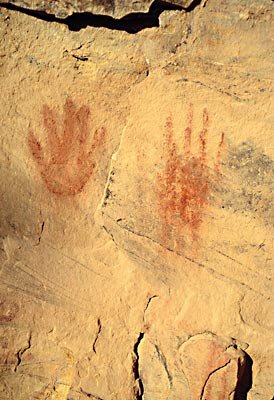
 Sea oats stand at attention resisting brisk,
 I bid Albert goodbye at the landing in the Pirate's Cove. As much as I wanted him to come with me, he assured me that a horse at sea was not a good situation for all parties concerned. Also, he seemed to suggest that there had been a parting of the ways between he and Matilda and it was best that he not be on board-- something about owing money-- I didn't pry further. Albert promised that he would find a way to the Abbey and would meet me there.
 Faces...yesterday, today and tomorrow